Engineering Efficiency in Month-End Financial Closings
Engineering Efficiency in Month-End Financial Closings
The high cost of "Clarification Chaos": How Qlarify transformed a fragmented, email reliant accounting workflow into a centralized, AI driven automation engine.
The high cost of "Clarification Chaos": How Qlarify transformed a fragmented, email reliant accounting workflow into a centralized, AI driven automation engine.
Accounting firms managing numerous small businesses often face a "bottleneck" during period-end closings: transaction discrepancies.
Traditionally, resolving these requires endless email chains and manual Chart of Accounts (CoA) adjustments, leading to delayed reporting and increased error risks
Accounting firms managing numerous small businesses often face a "bottleneck" during period-end closings: transaction discrepancies.
Traditionally, resolving these requires endless email chains and manual Chart of Accounts (CoA) adjustments, leading to delayed reporting and increased error risks
The objective was to transition from identifying pain points to architecting a functional, digital ecosystem that resolves the "Clarification Chaos". This process was driven by a synthesis of user research, self-reported requests, and direct feedback from the customer support team.
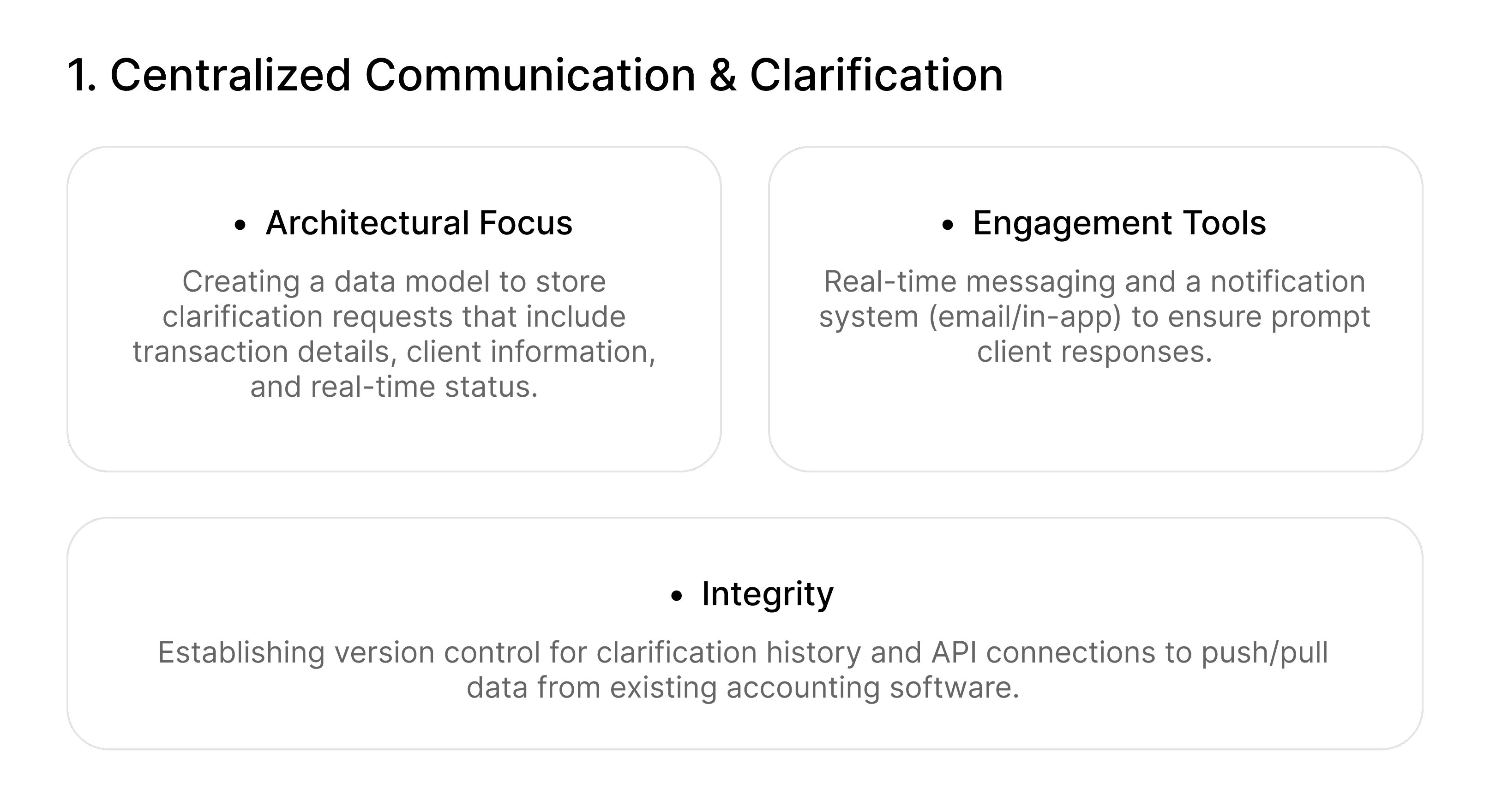
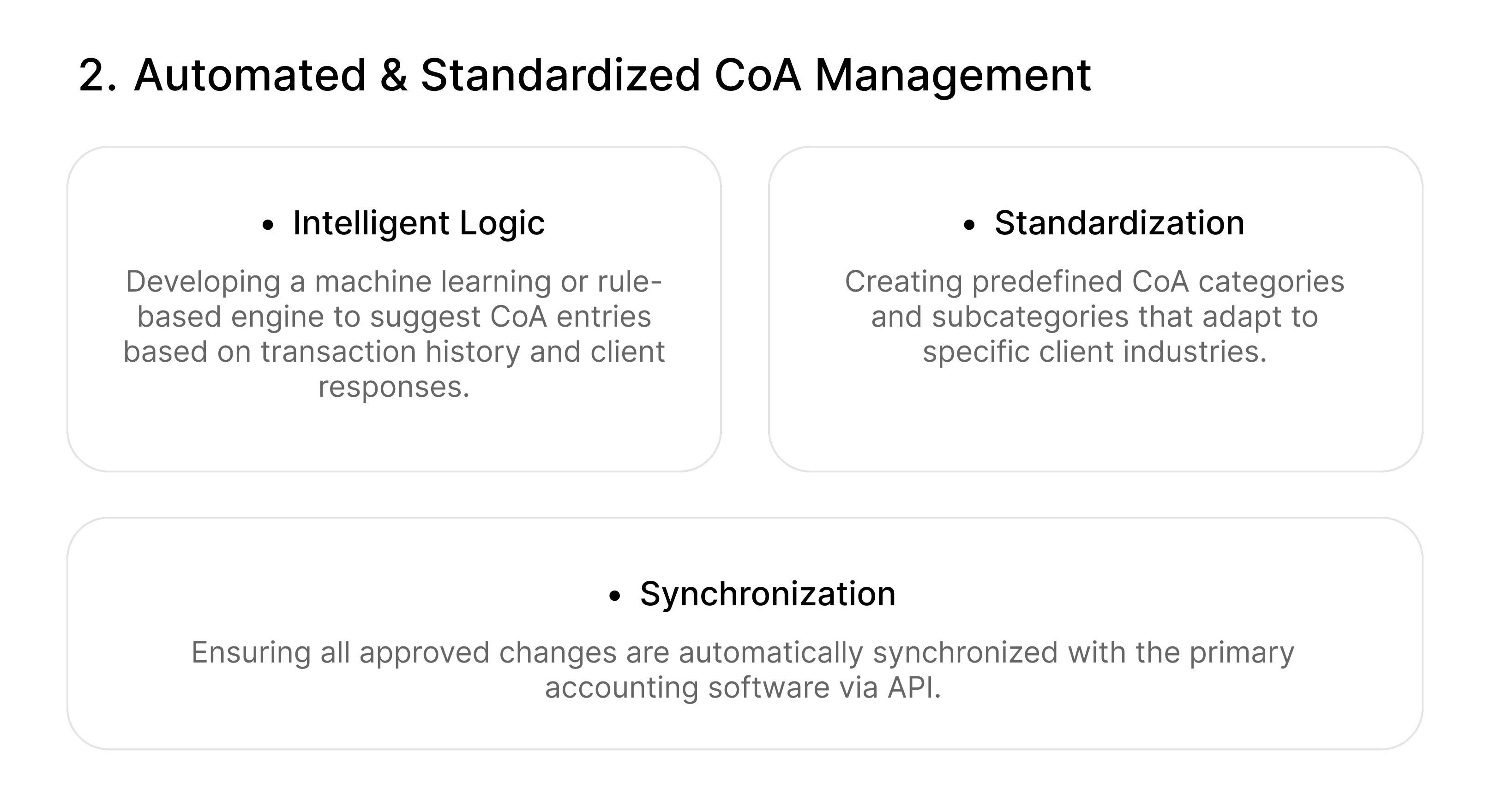
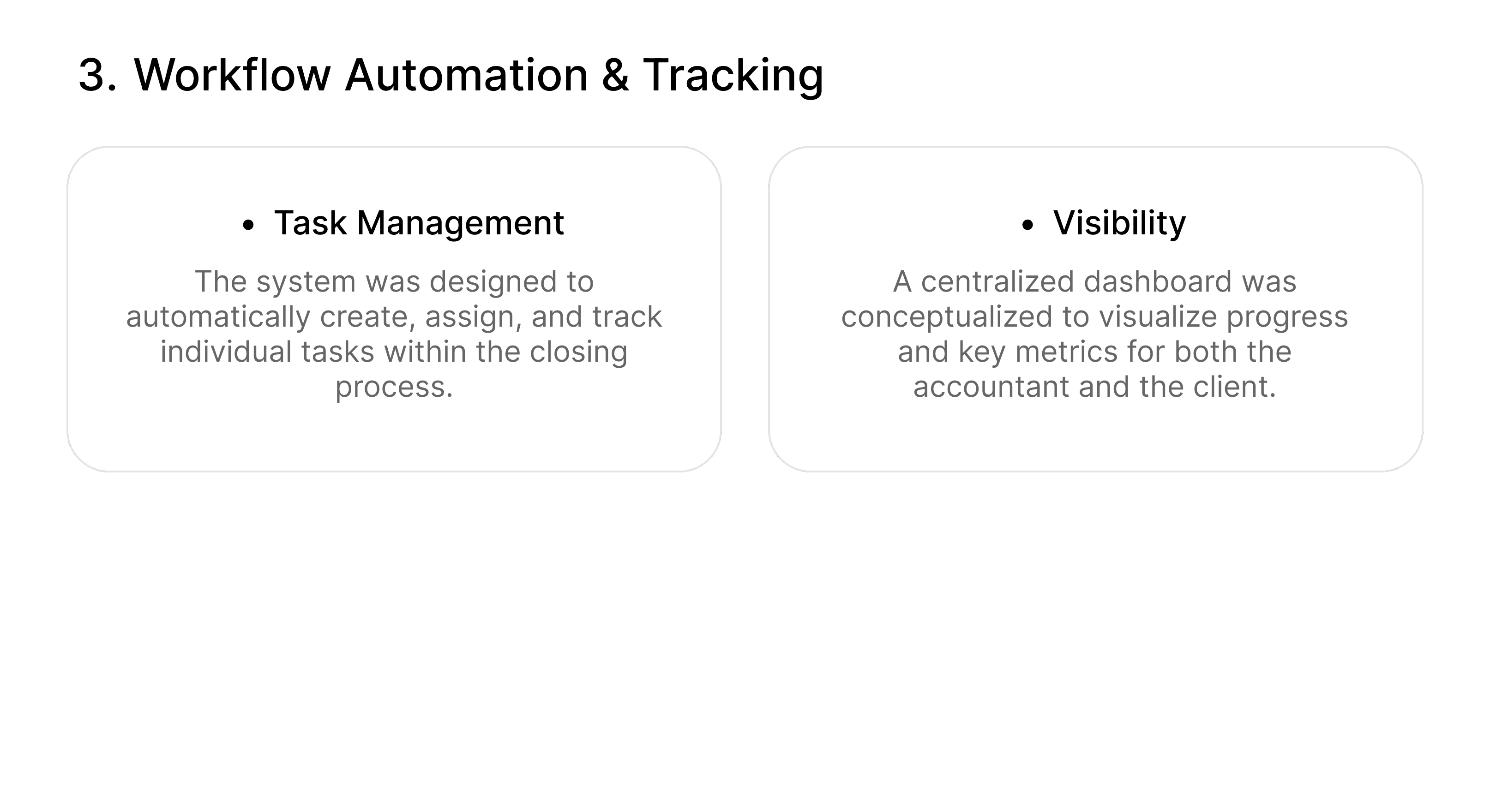
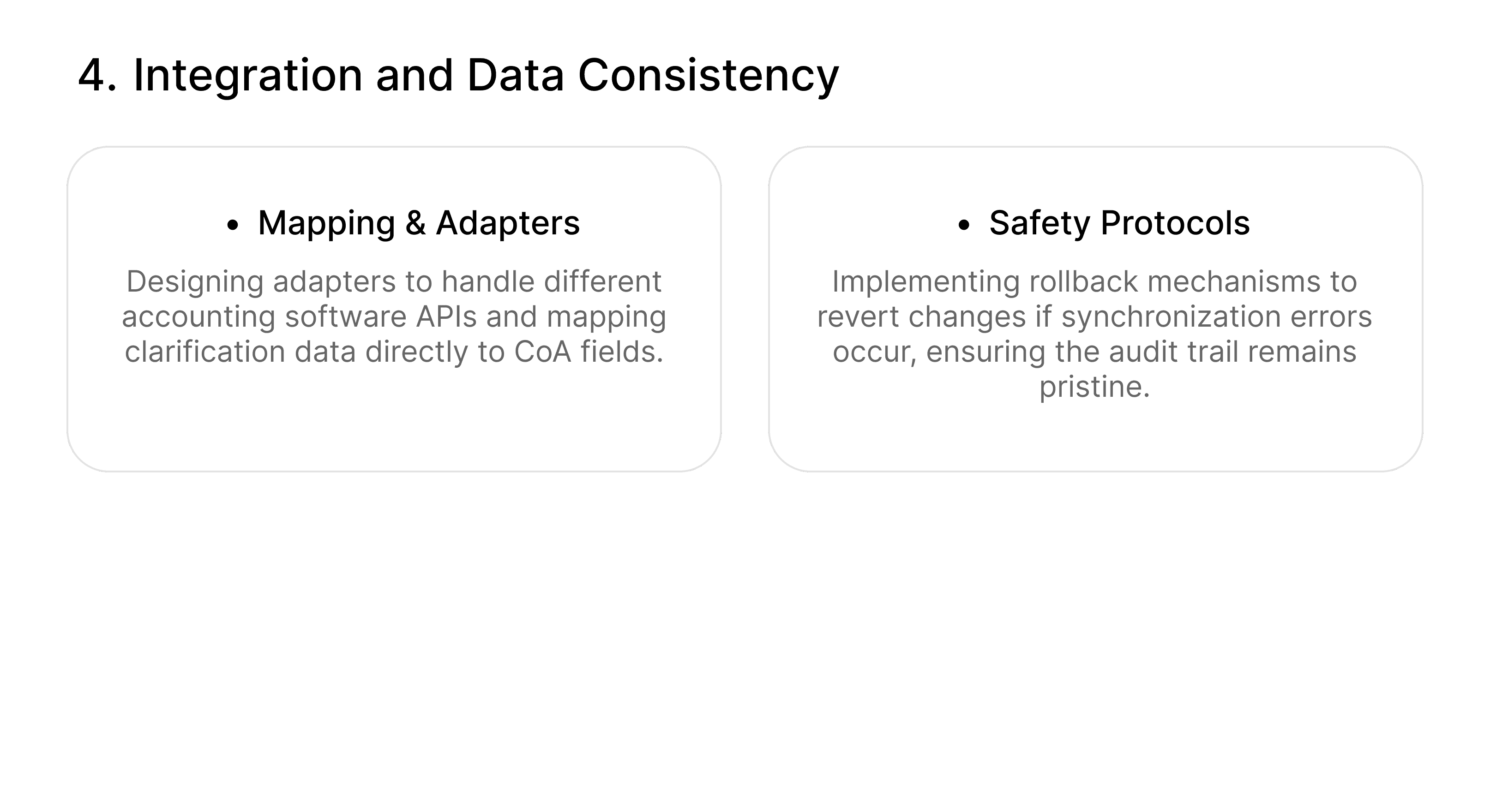
The discovery led to four primary pillars of innovation:
The objective was to transition from identifying pain points to architecting a functional, digital ecosystem that resolves the "Clarification Chaos". This process was driven by a synthesis of user research, self-reported requests, and direct feedback from the customer support team.
The discovery led to four primary pillars of innovation:
The primary goal was to create a unified system for Existing Clients, New Users, and Internal Support Teams that prioritized:
The primary goal was to create a unified system for Existing Clients, New Users, and Internal Support Teams that prioritized:
Qlarify was designed to solve this by integrating a collaborative clarification module directly into the accounting workflow, utilizing AI to bridge the gap between complex accounting data and client input.
Qlarify was designed to solve this by integrating a collaborative clarification module directly into the accounting workflow, utilizing AI to bridge the gap between complex accounting data and client input.
Duration
Duration
-5 months
-Sept 2024 - Jan 2025
-5 months
-Sept 2024 - Jan 2025
My Role
My Role
-Research & Design
-Documentation & UI
-User Testing
-Design for AI
-Research & Design
-Documentation & UI
-User Testing
-Design for AI
Team
Team
-1 PM
-1 EM, 2 QA, 6 Developers
-1 Product Designer (myself) & my Principal Designer
-1 PM
-1 EM, 2 QA, 6 Developers
-1 Product Designer (myself) & my Principal Designer
B2B FEATURE DESIGN
Context
Context
OUTCOME
The Challenge
The Challenge
Strategic Objectives
Strategic Objectives
Solution Discovery
Solution Discovery
FINAL FEATURES
FINAL FEATURES
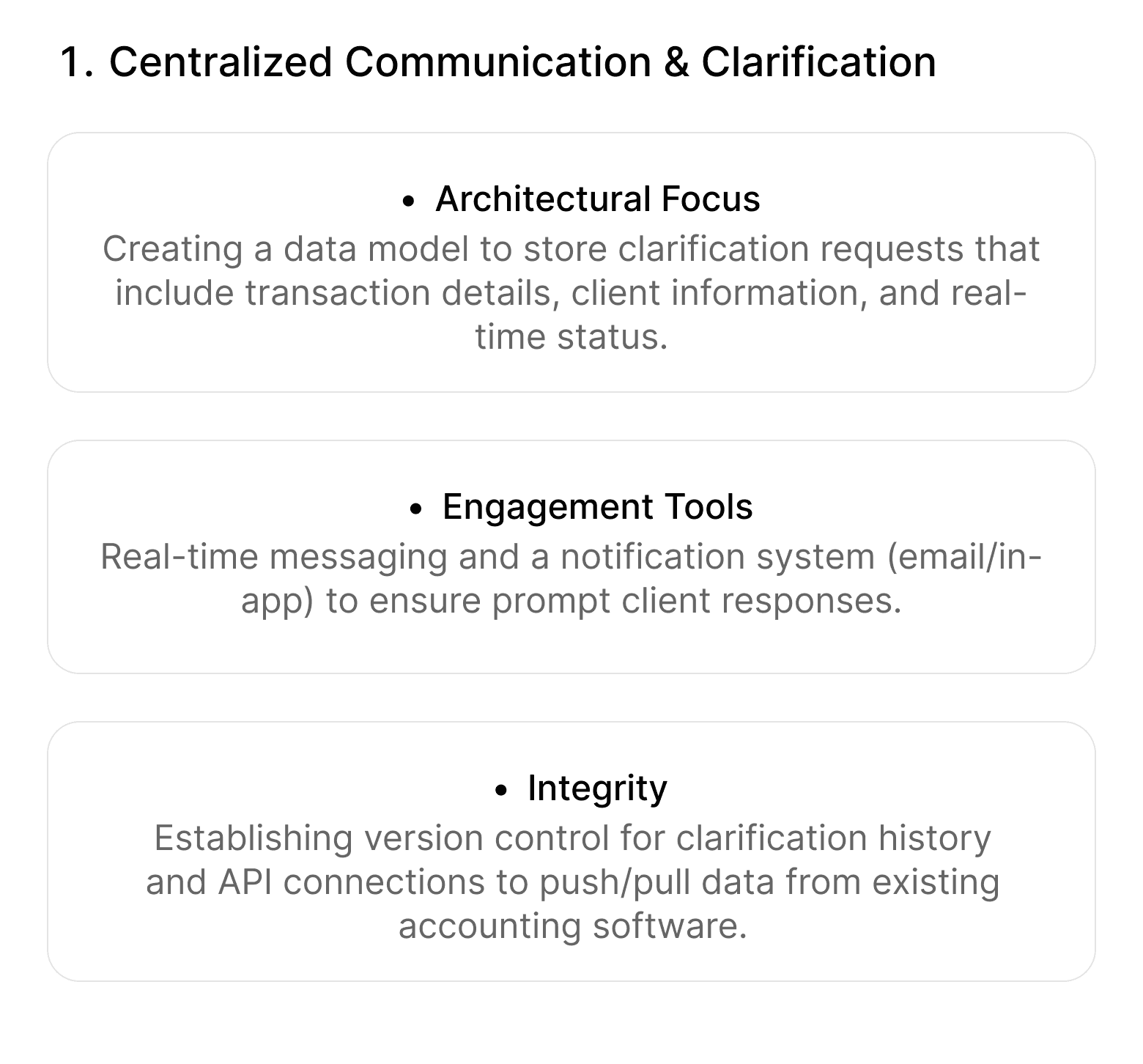
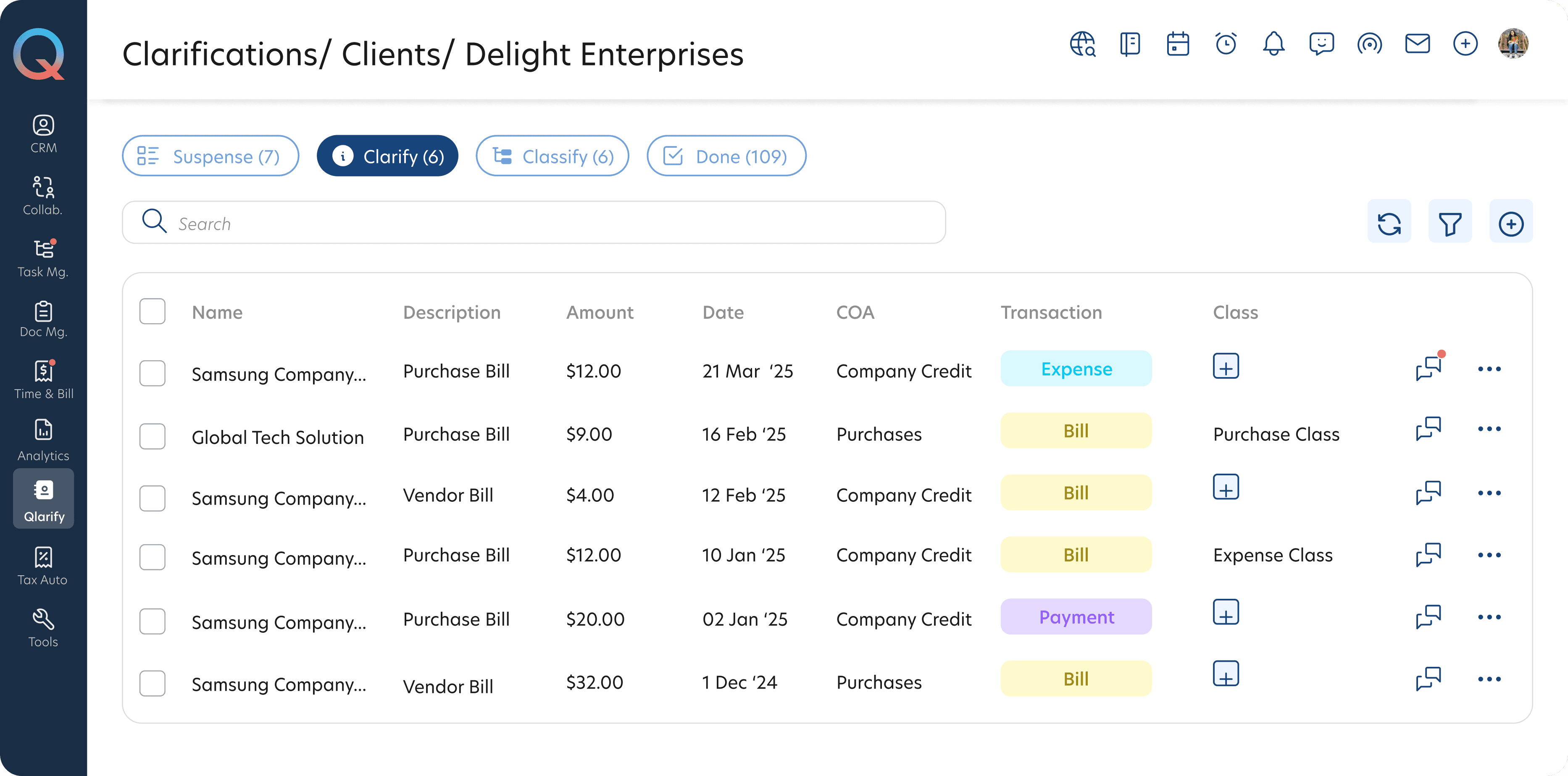
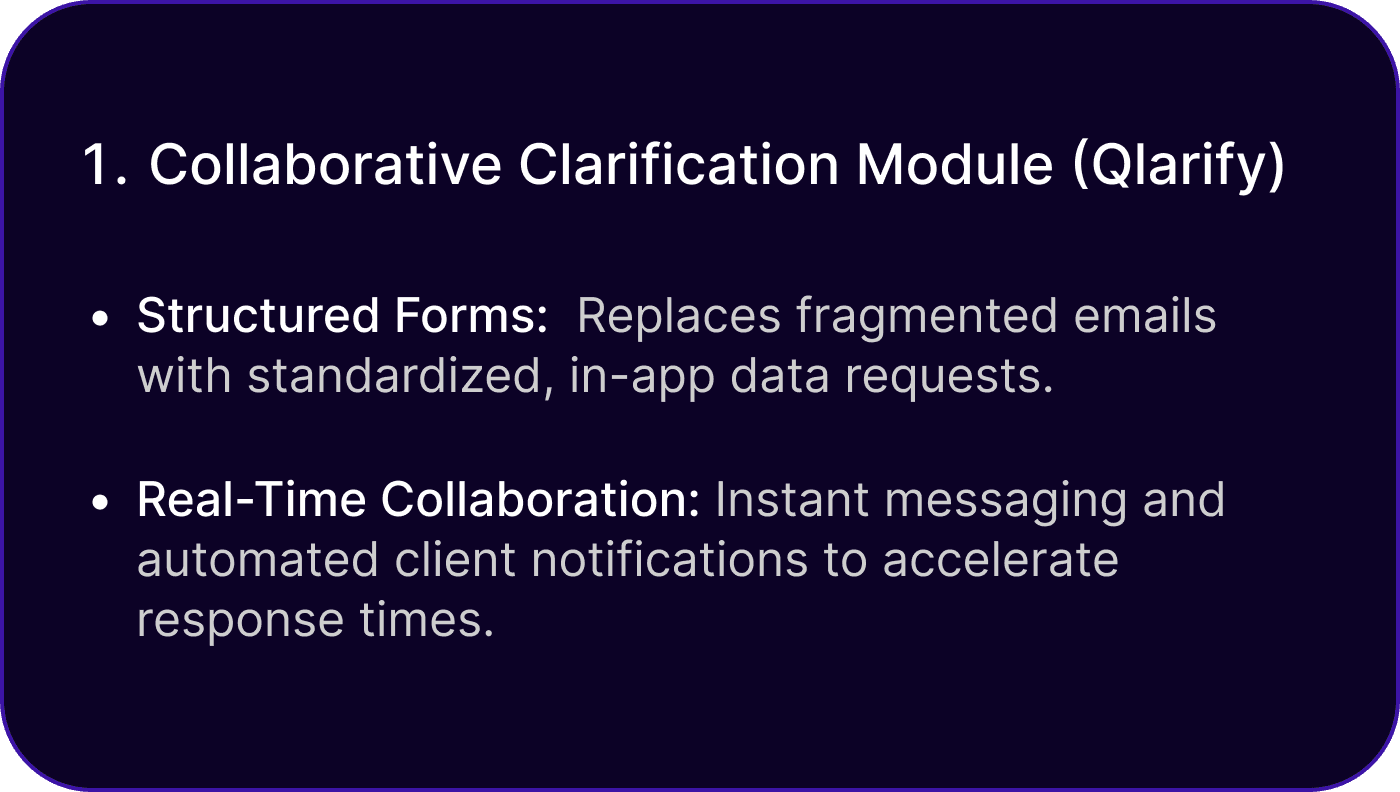
Collaborative Clarification Module (Qlarify)
Structured Forms:
Replaces fragmented emails with standardized, in app data requests.
Real-Time Collaboration:
Instant messaging and automated client notifications to accelerate response times.
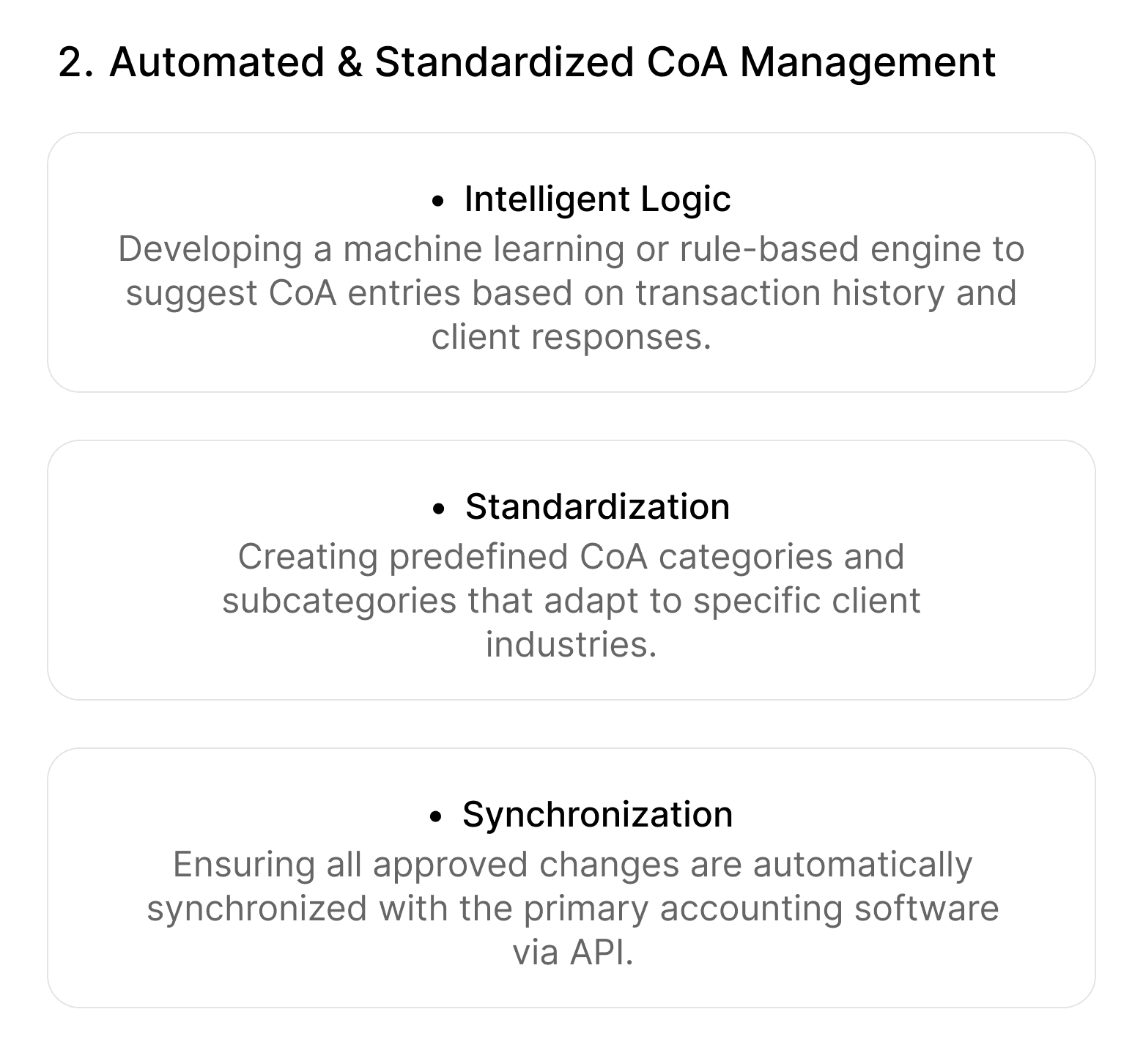
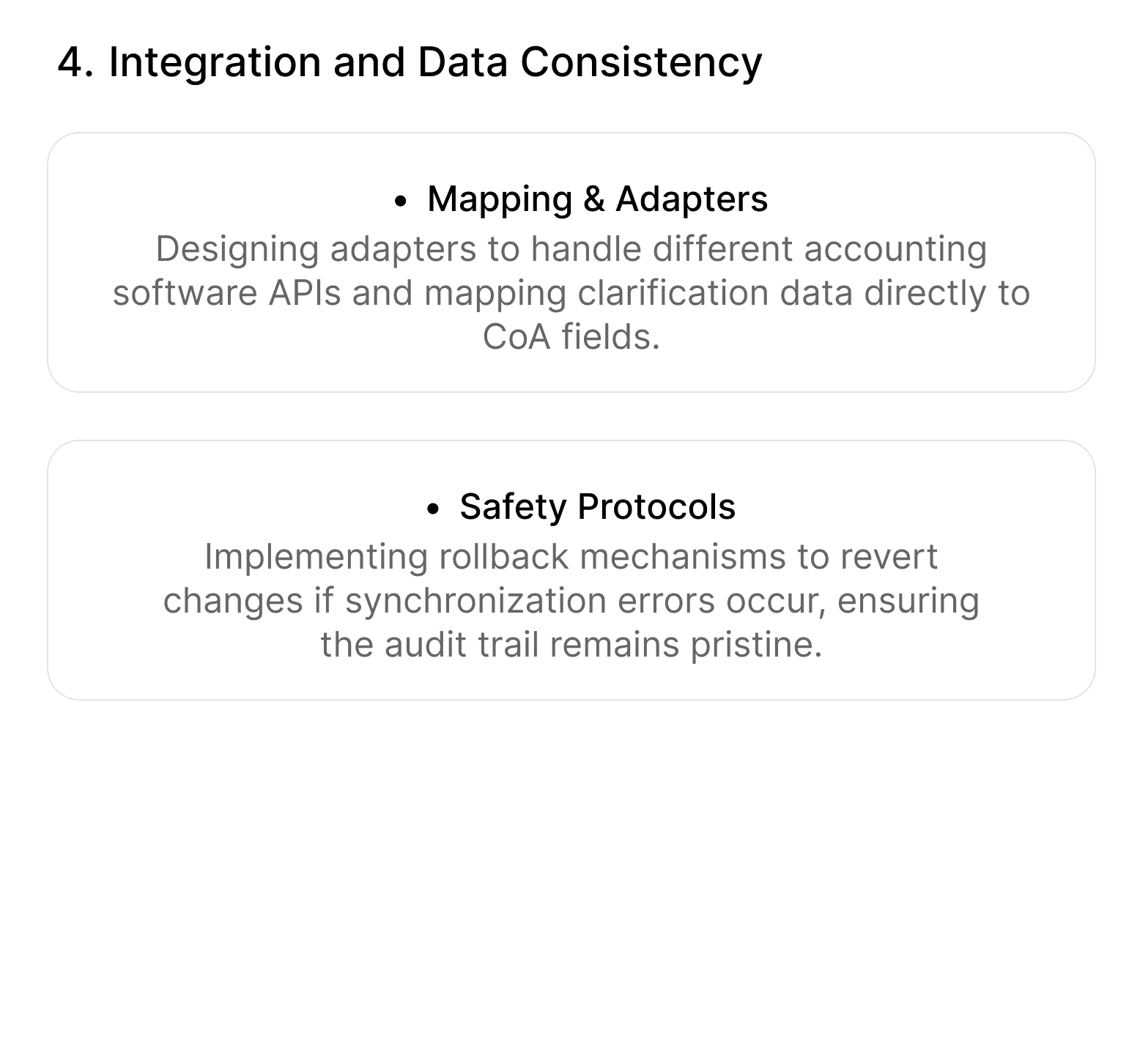
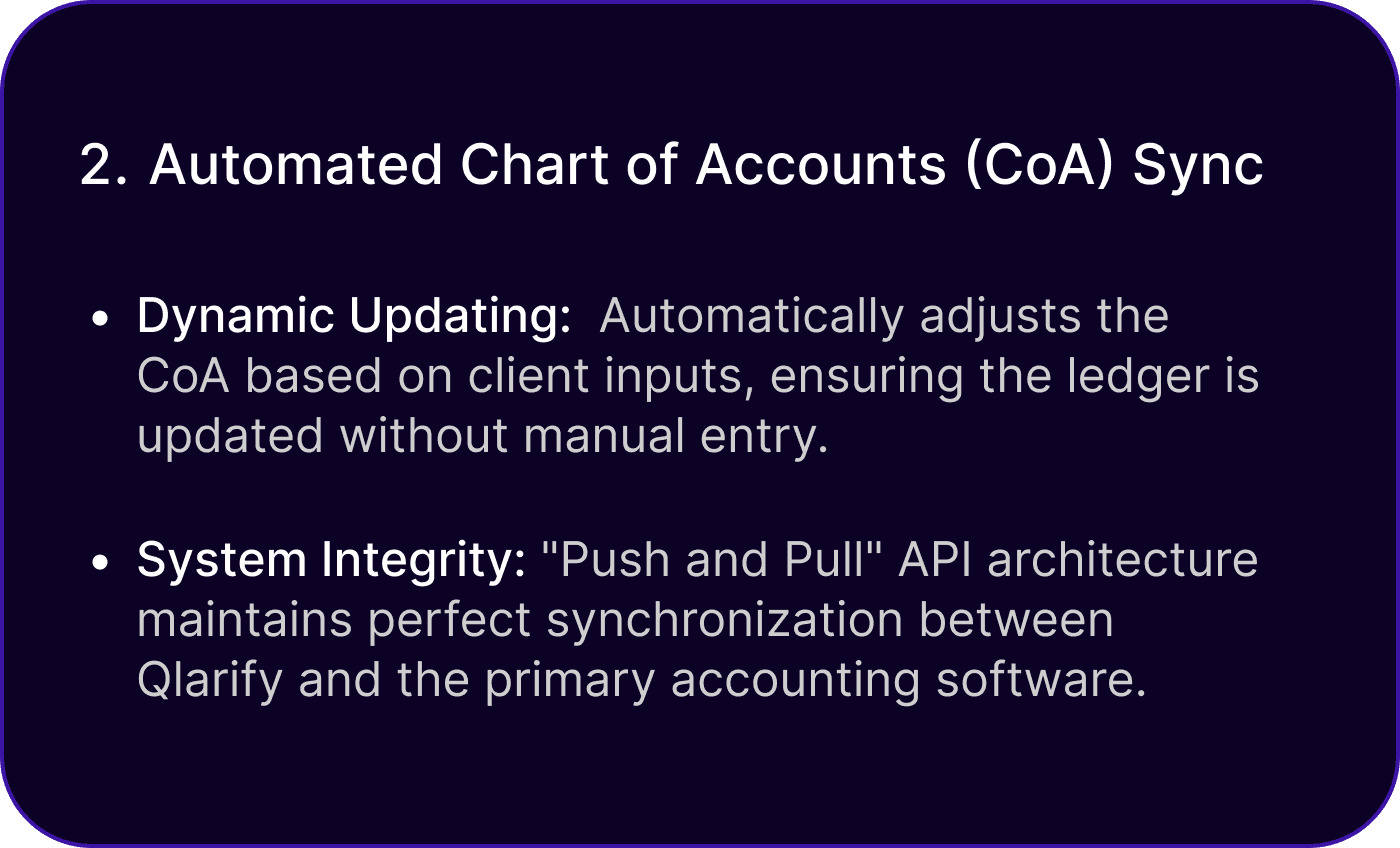
Automated Chart of Accounts (CoA) Sync
Dynamic Updating: Automatically adjusts the CoA based on client inputs, ensuring the ledger is updated without manual entry.
System Integrity:
"Push and Pull" API architecture maintains perfect synchronization between Qlarify and the primary accounting software.
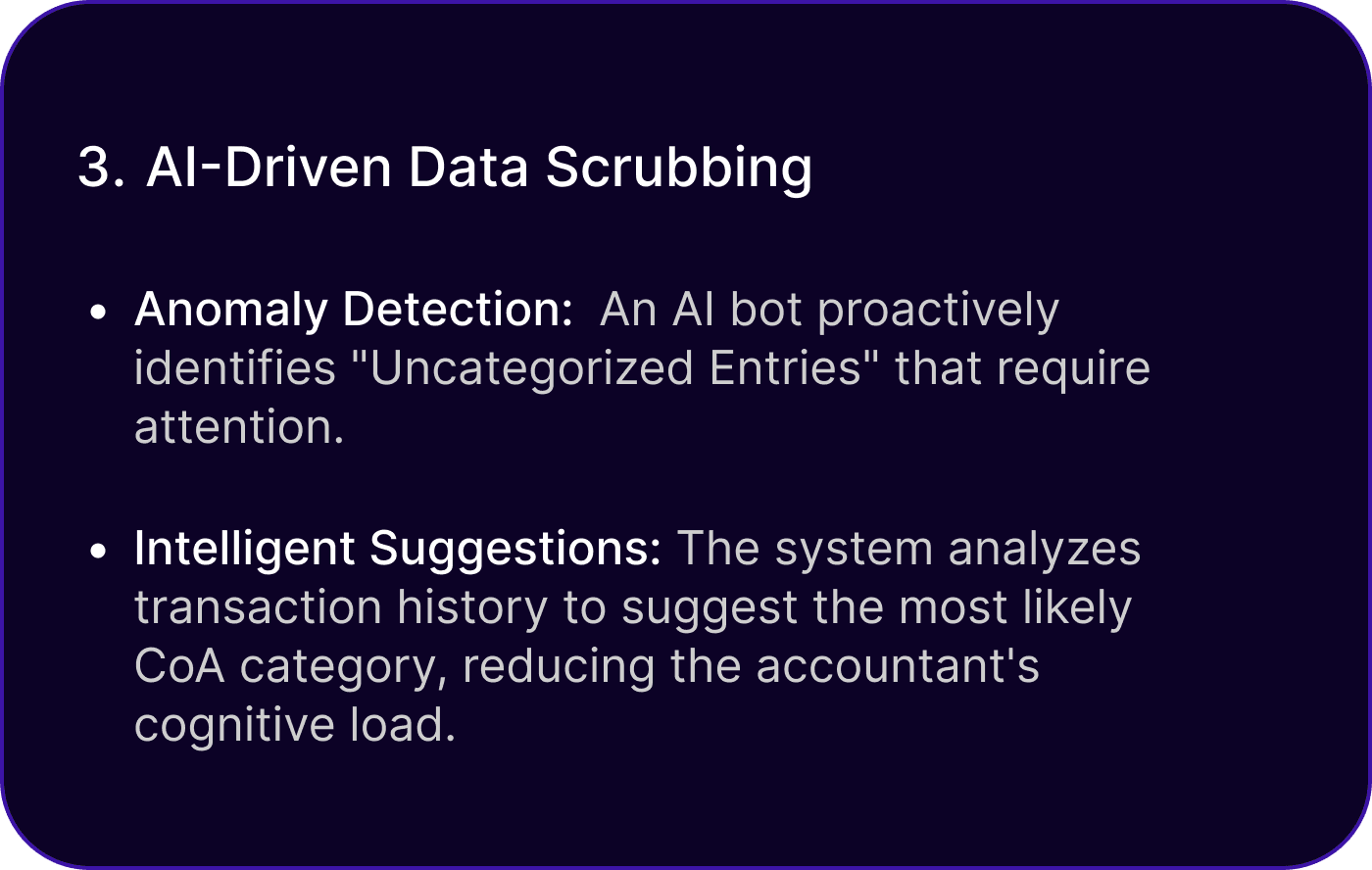
AI-Driven Data Scrubbing
Anomaly Detection:
An AI bot proactively identifies "Uncategorized Entries" that require attention.
Intelligent Suggestions:
The system analyzes transaction history to suggest the most likely CoA category, reducing the accountant's cognitive load.
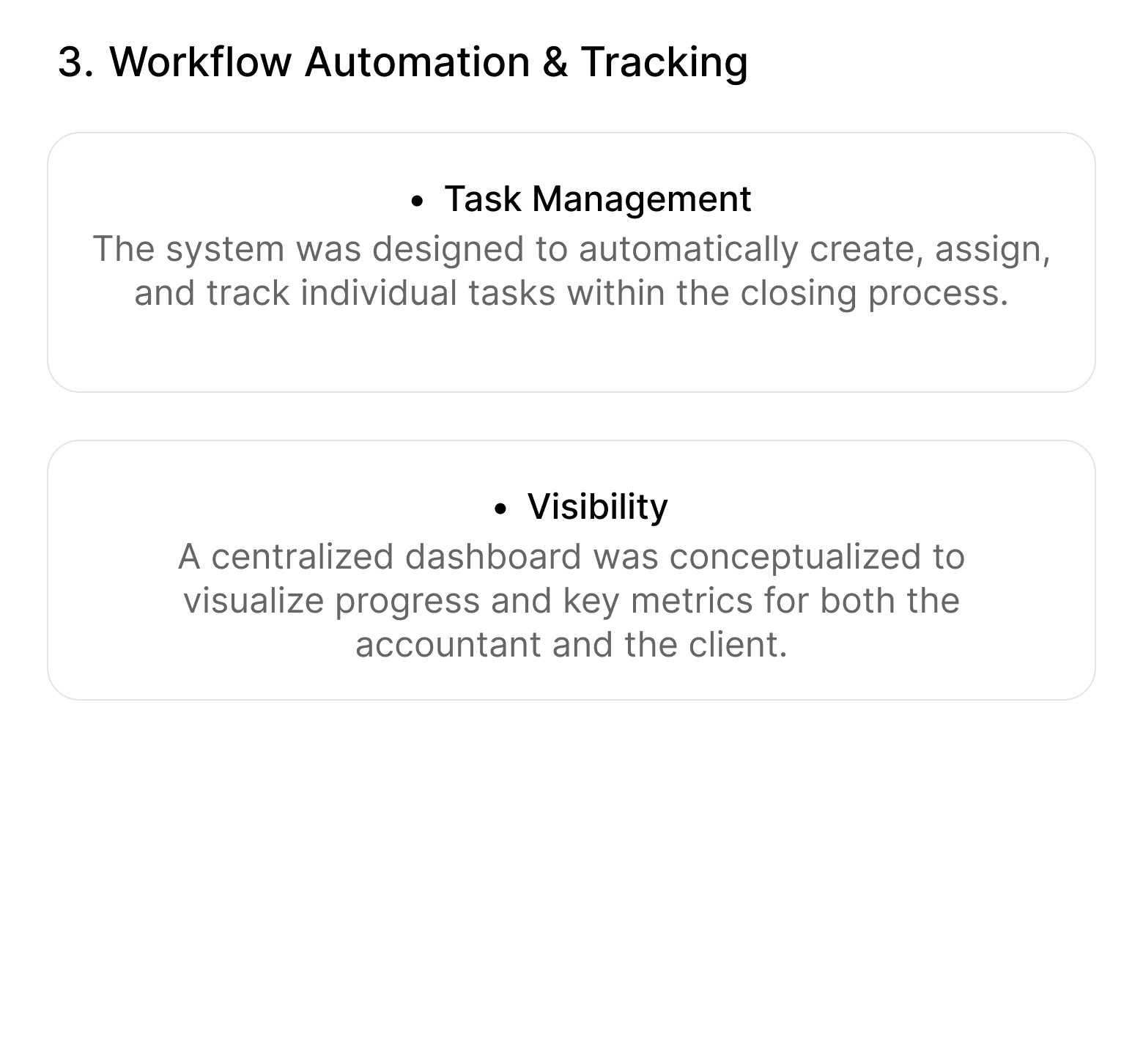
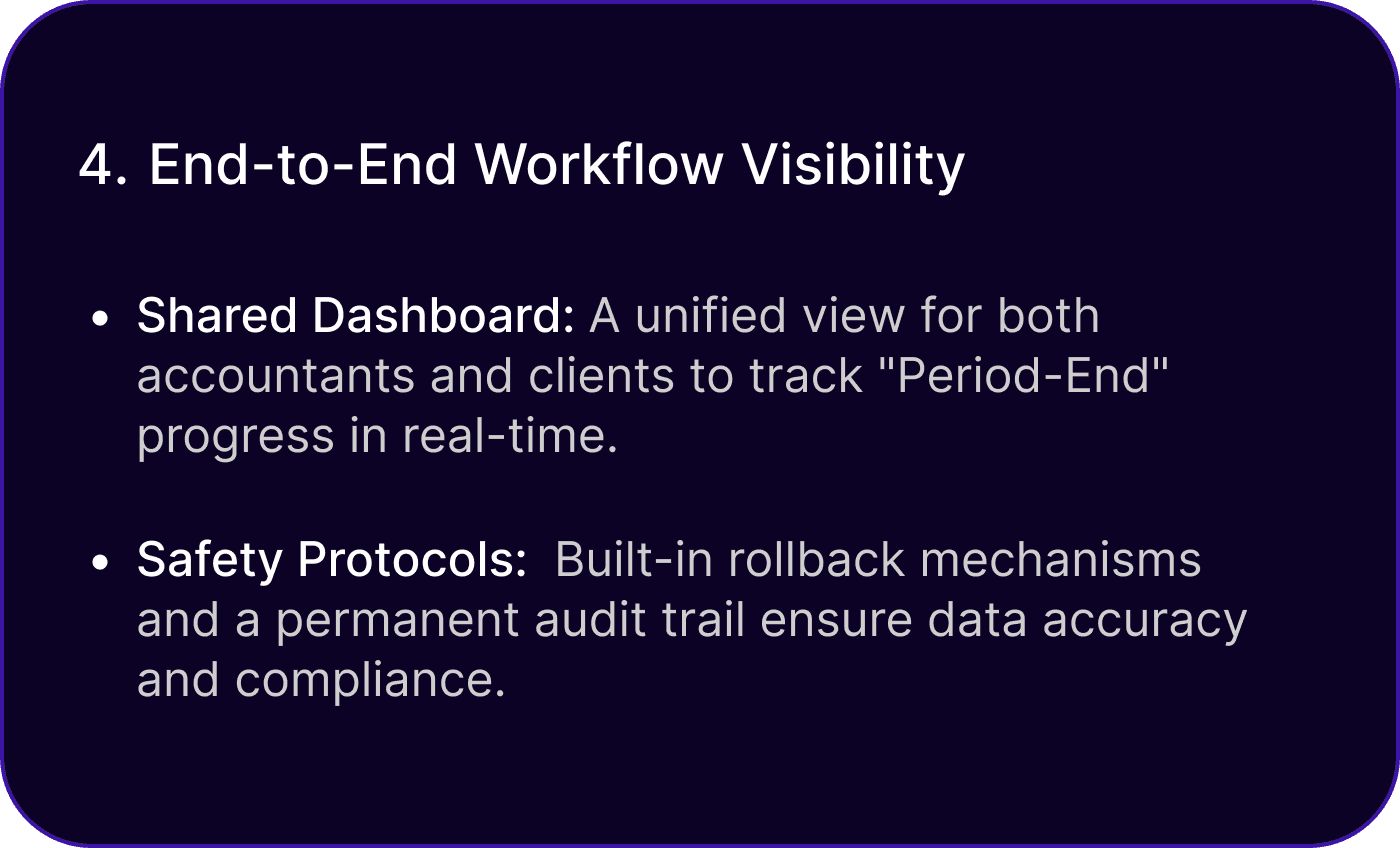
End-to-End Workflow Visibility
Shared Dashboard:
A unified view for both accountants and clients to track "Period End" progress in real time.
Safety Protocols:
Built-in rollback mechanisms and a permanent audit trail ensure data accuracy and compliance.
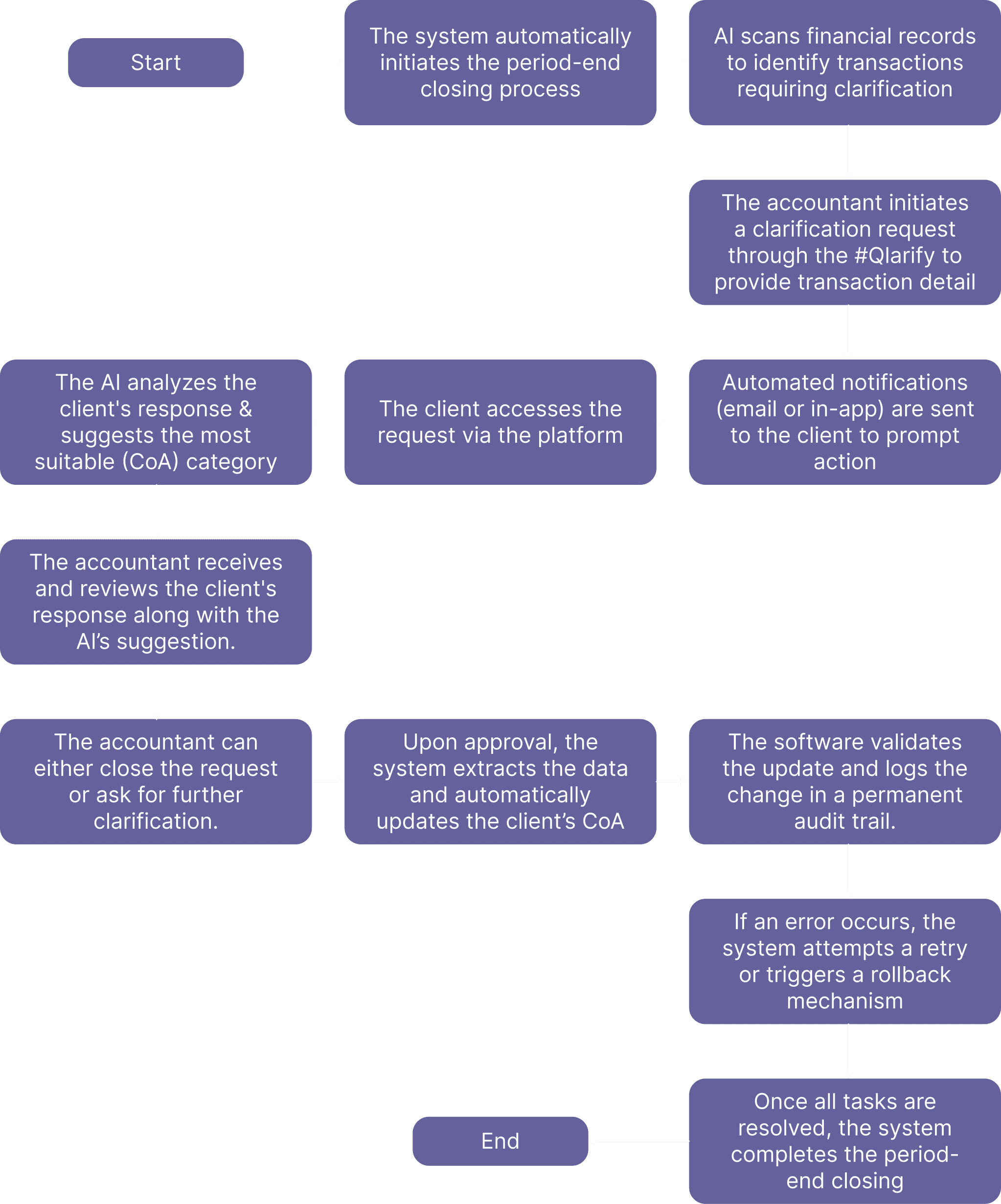
FINAL FEATURES USER FLOW
FINAL FEATURES USER FLOW
FINAL DESIGN PROTOTYPE
FINAL DESIGN PROTOTYPE
Start
End
The system automatically initiates the period-end closing process
AI scans financial records to identify transactions requiring clarification
The accountant initiates a clarification request through the #Clarify to provide transaction detail
Automated notifications (email or in-app) are sent to the client to prompt action
The client accesses the request via the platform
The AI analyzes the client's response & suggests the most suitable (CoA) category
The accountant receives and reviews the client's response along with the AI’s suggestion.
The accountant can either close the request or ask for further clarification.
Upon approval, the system extracts the data and automatically updates the client’s CoA
The software validates the update and logs the change in a permanent audit trail.
If an error occurs, the system attempts a retry or triggers a rollback mechanism
Once all tasks are resolved, the system completes the period end closing
AI-UX Orchestration:
Designed an AI-human loop where a bot proactively identifies errors and suggests resolutions to minimize user cognitive load.
AI-UX Orchestration:
Designed an AI-human loop where a bot proactively identifies errors and suggests resolutions to minimize user cognitive load.
Process Transformation:
Re-engineered high friction, unstructured communication into standardized, audit ready digital forms and workflows.
Process Transformation:
Re-engineered high friction, unstructured communication into standardized, audit ready digital forms and workflows.
LEARNINGS & TAKEAWAYS
LEARNINGS & TAKEAWAYS
Data Integrity Risks:
Each manual adjustment to the Chart of Accounts (CoA) introduced inconsistencies and potential inaccuracies

Communication Friction:
Clients struggled with accounting terminology, leading to delays and frustration.
Communication Friction:
Clients struggled with accounting terminology, leading to delays and frustration.

Data Integrity Risks:
Each manual adjustment to the Chart of Accounts (CoA) introduced inconsistencies and potential inaccuracies

Operational Drag:
Inefficient workflows slowed down the entire book-closing process, negatively impacting firm efficiency and client satisfaction.
Operational Drag:
Inefficient workflows slowed down the entire book closing process, negatively impacting firm efficiency and client satisfaction.
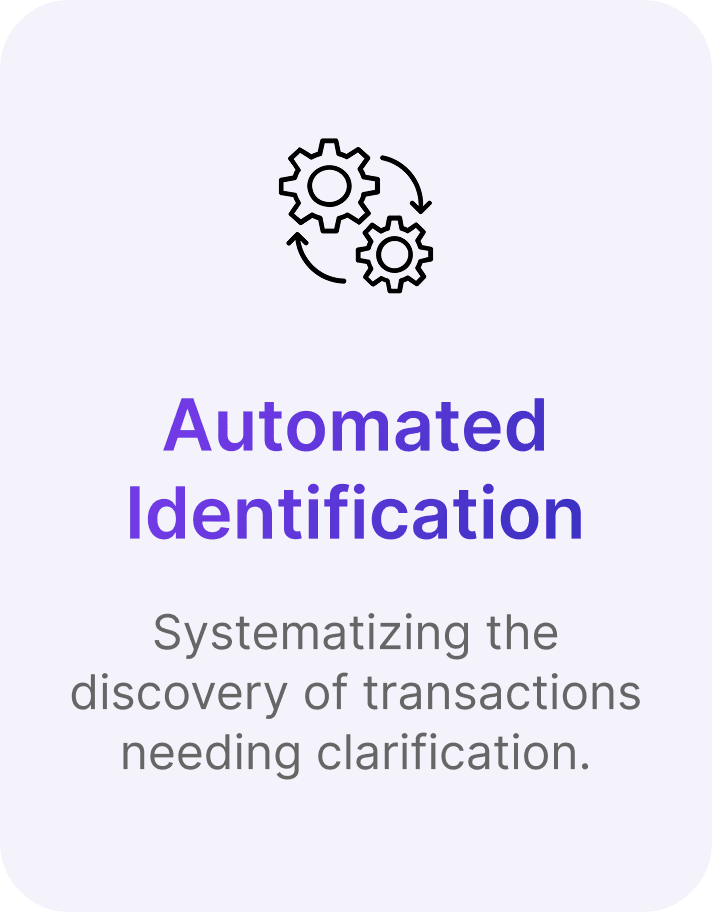
Systematizing the discovery of transactions needing clarification.
Automated Identification

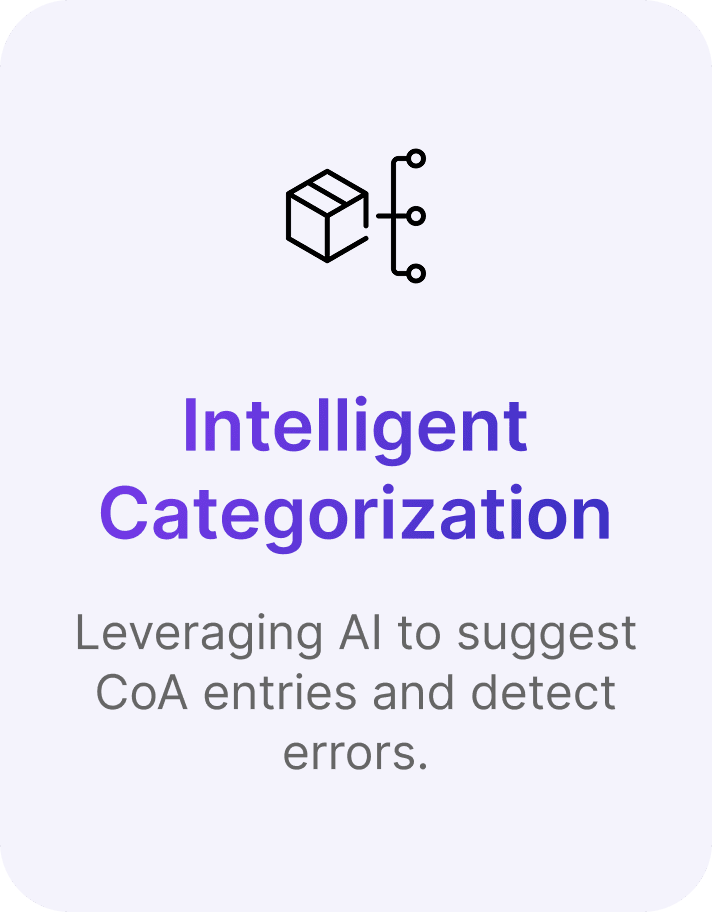
Leveraging AI to suggest CoA entries and detect errors.
Intelligent Categorization

Replacing unstructured emails with structured, in app communication.
Standardized Workflows
OUTCOMES
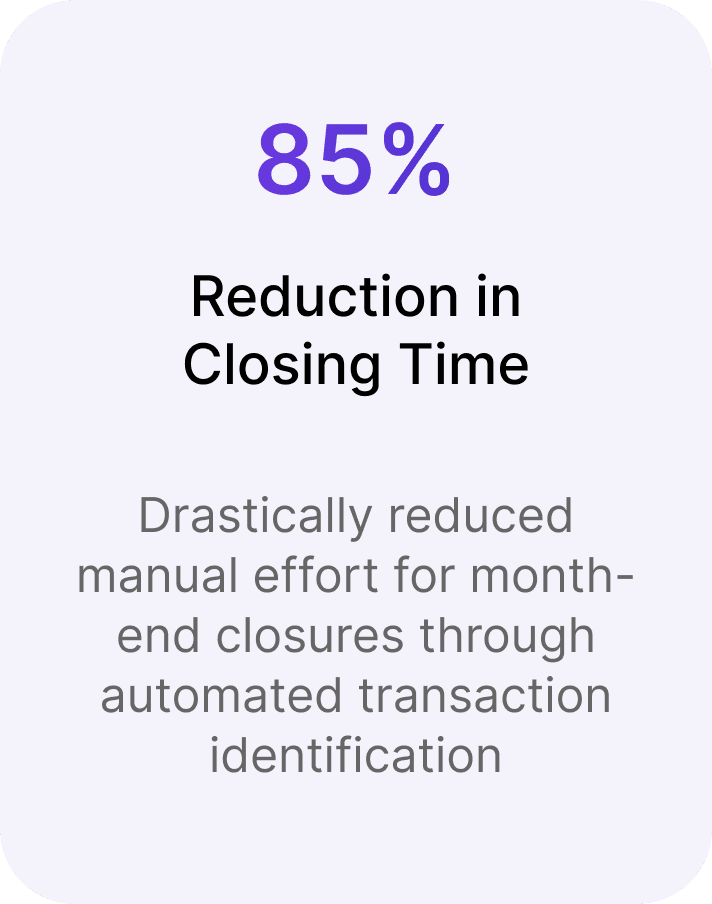
Drastically reduced manual effort for month end closures through automated transaction identification
Reduction in Closing Time
85%
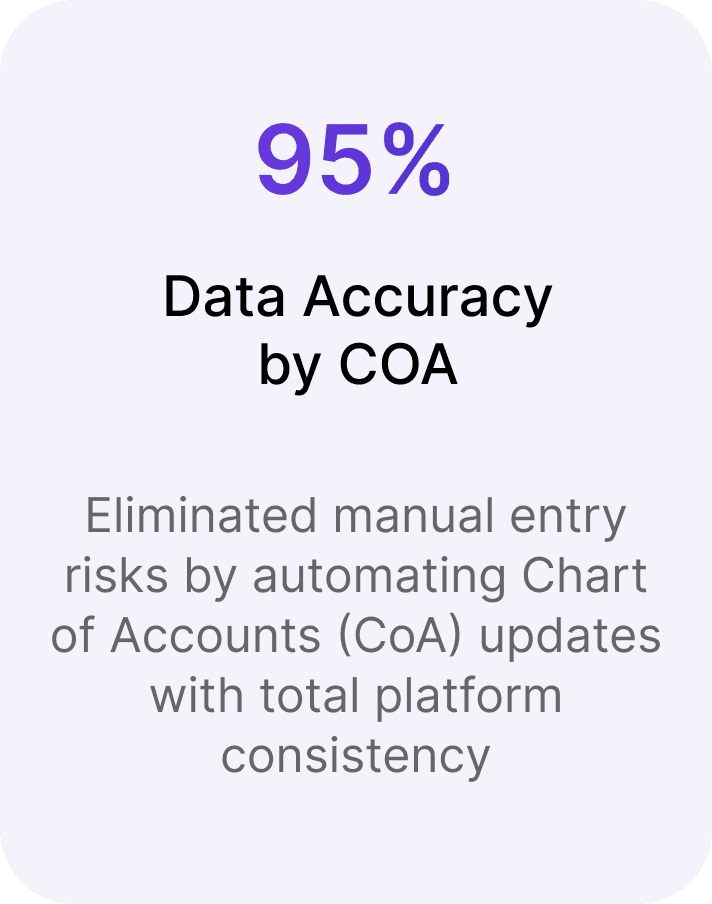
Eliminated manual entry risks by automating Chart of Accounts (CoA) updates with total platform consistency
Data Accuracy by COA
95%
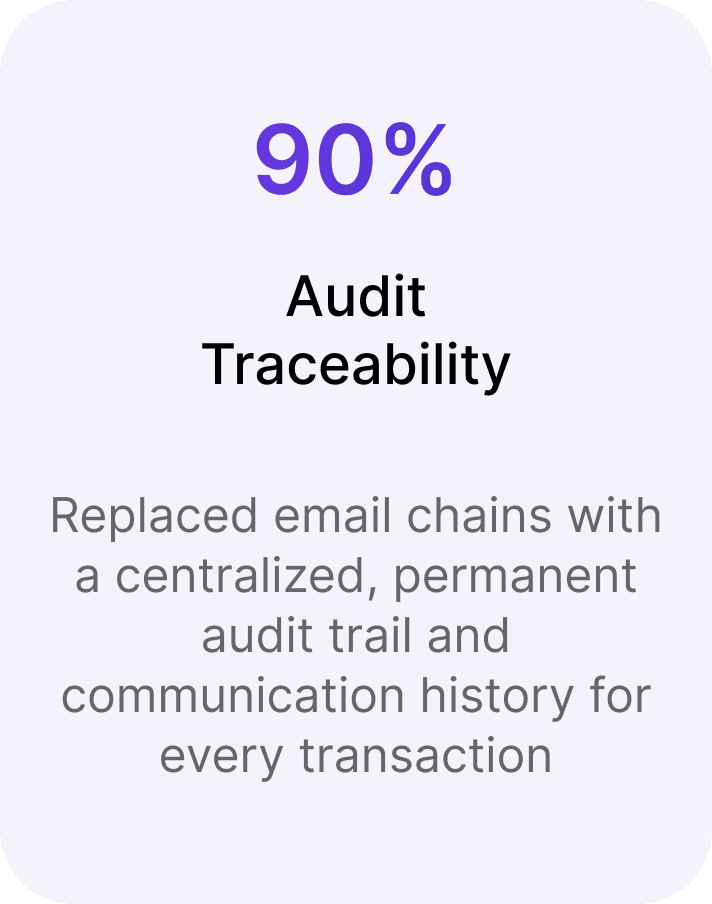
Replaced email chains with a centralized, permanent audit trail and communication history for every transaction
Audit Traceability
90%